Why Is My Septic System Backing Up on a Hill? Uphill Drainage Explained
A gravity septic system relies on one simple rule: wastewater flows downhill. On a flat lot, that's easy. When a septic system is backing up on a hill, the cause is often tied to exactly how the system handles the uphill parts of its layout, not a plain clog.
Homes across the hillier parts of Southwest Missouri, from the ridges around Ozark to the bluffs near Branson, often need septic systems built around a slope rather than a flat yard. Here's how those systems move wastewater uphill, what typically goes wrong, and what a backup on a hill usually means.
Dealing with a backup on a sloped lot?
Get emergency septic service from Southwest Sewer & Septic. We inspect pump chambers and hillside drain fields across Southwest Missouri.
Why Gravity Alone Can't Handle Every Lot
A standard septic system moves wastewater by gravity alone. The pipe from the house to the tank, and the pipe from the tank to the drain field, both need to slope downward at roughly a quarter inch per foot. If the drain field sits higher than the tank, gravity can't push effluent uphill, no matter how well the rest of the system works.
That's the situation on a lot of hillside properties. The house sits partway up or down a slope, and the only usable soil for a drain field is uphill from the tank. Builders solve this with a pump, not by fighting gravity.
How a Septic System Actually Moves Wastewater Uphill
Two components usually make uphill drainage possible, and both show up often on hillside lots in Southwest Missouri.
Pump Chambers
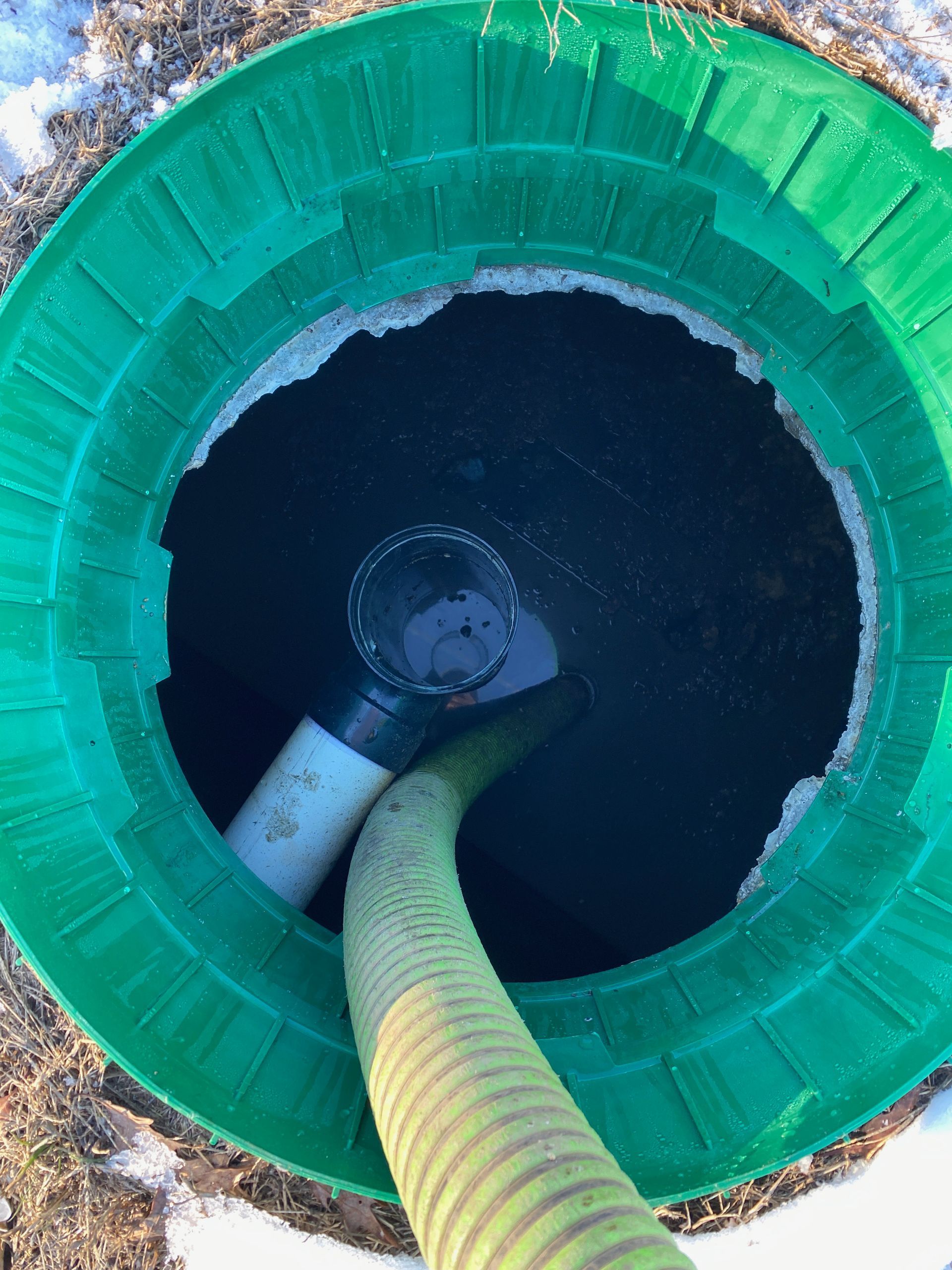
A pump chamber, sometimes called a dosing tank, sits between the septic tank and the drain field. Effluent flows into it by gravity, then a float switch triggers an effluent pump once the chamber fills to a set level. The pump pushes wastewater uphill in short, timed doses instead of a constant flow, which also protects the drain field from getting overloaded all at once.
Serial Distribution and Drop Boxes
On a sloped drain field, installers often use serial distribution instead of a single distribution box. Wastewater fills the highest trench first, then spills into a drop box that feeds the next trench down once the first one reaches capacity. It works its way downhill through the whole field one section at a time, using gravity on the slope even after the pump has done its job.
What Usually Causes a Hillside Septic Backup
Most hillside backups trace back to one of a few things.
- A failed or stuck pump, so effluent has nowhere to go but back toward the house
- A tripped breaker or power outage that shuts the pump off without anyone noticing
- A clogged or overloaded trench near the top of a serial distribution field, with no way for wastewater to reach the lower trenches
- A low spot, or belly, in the pipe run that collects solids even when the overall slope looks fine
- Saturated hillside soil after several days of rain, since water moving through the slope itself can fill a drain field from underneath
What to Do If Your Septic System Backs Up on a Slope
Start by checking the pump chamber for an alarm light or an audible alert. Many hillside systems include one specifically because a silent pump failure is the most common cause of a slow, confusing backup. If the alarm is sounding, or you're not sure whether you even have one, stop running water in the house and call a professional before the tank overflows.
- Check the pump chamber panel for an alarm light or a tripped breaker
- Note whether the backup started after heavy rain or seems unrelated to weather
- Avoid running water, laundry, or dishwashers until the system has been inspected
Southwest Sewer & Septic Handles Hillside Systems Across Southwest Missouri
Uphill drainage adds a layer most septic companies don't think about every day. Southwest Sewer & Septic services pump chambers and sloped drain fields across Bolivar, Springfield, Ozark, and the hillier corners of Southwest Missouri, including
emergency septic pumping when a backup can't wait. If your system is showing more serious warning signs, our guide to
5 signs you need to replace your septic system walks through what to watch for.
Call 417-326-4330 to schedule an inspection of your pump chamber or drain field before a small issue turns into a bigger one.
Frequently Asked Questions
Why do septic systems need a pump on a hill?
When a drain field sits higher than the septic tank, gravity can't move wastewater there on its own. A pump chamber collects effluent from the tank and pushes it uphill in timed doses, which is standard practice on sloped lots rather than a sign of a poorly designed system.
What happens if my septic pump fails?
Once the pump chamber fills past what the pump can handle, wastewater has nowhere to go except back through the pipes toward your house. A failed pump is one of the most common causes of a sudden backup on a hillside system, and it usually shows up as slow drains that get worse over a day or two rather than an immediate flood.
Can heavy rain cause a hillside septic system to back up?
Yes. Water moving through saturated soil on a slope can reach a drain field from the sides or below, not just from the surface above it. Several days of steady rain are usually more of a problem than one hard storm, since the ground has more time to soak through.
How do I know if the problem is the pump or a clog?
A pump problem usually comes with a warning alarm, a tripped breaker, or a backup that builds gradually over a day or two. A straightforward clog tends to affect one drain suddenly instead of the whole house. Either way, a professional can check the pump chamber and drain field to confirm which one you're dealing with.
Is a septic system on a hill more expensive to maintain?
It usually costs a bit more to maintain than a flat-lot system, mainly because of the pump and its components. Keeping the pump chamber inspected and the float switch working is worth it, since it's far less expensive than dealing with a backup or a failed drain field. Southwest Sewer & Septic can check your pump chamber during a routine visit so problems get caught early.
You might also like